Beyond the specification: What makes a hospitality Pod perform.
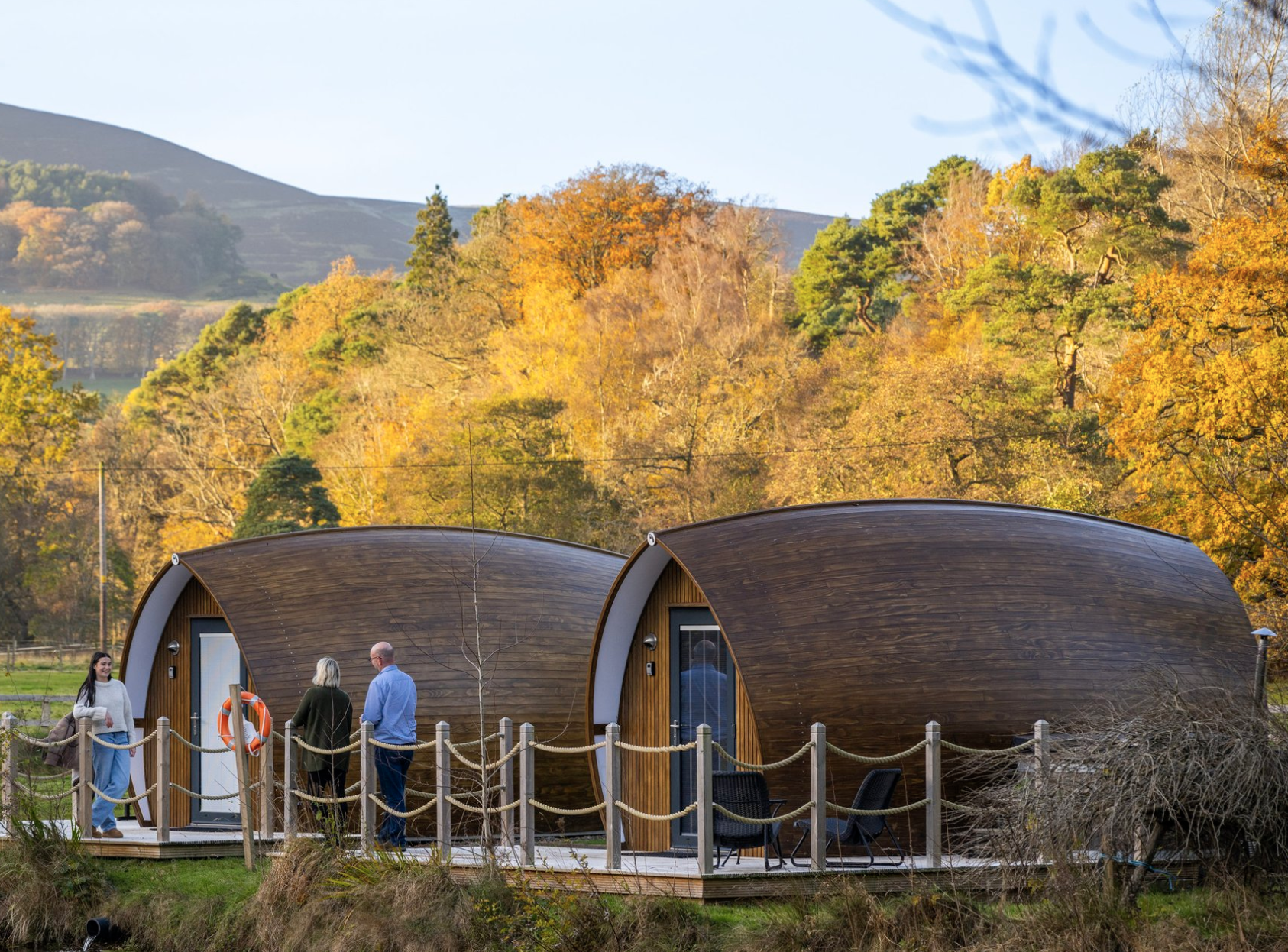
The Hotelier Pod
When people look at a hospitality pod, the first things they tend to notice are the finishes, the glazing, the interior layout and the overall design.
Behind all of that, however, is something much more important: how the building actually performs.
A high-quality hospitality unit is not simply a collection of good materials and individual components. Structure, insulation, ventilation, heating, moisture management, controls and manufacturing tolerances all need to work together as one system.
That integration has a direct impact on guest comfort, energy use, maintenance requirements and, ultimately, how well the unit performs commercially over its lifetime.
It starts with the structure
The structural system is the foundation of everything that follows.
At Armadilla, our units are built around a robust structural frame designed to maintain accuracy throughout manufacture, transport and installation.
That consistency matters because even small variations can affect doors, glazing, finishes, airtightness and the performance of the wider building envelope.
Manufacturing within a controlled factory environment also allows key tolerances to be managed before the unit ever reaches site.
For operators, that means fewer variables during installation and greater confidence in the finished product.
The building envelope does more than keep heat in
Thermal performance is often reduced to a single insulation value, but the reality is more complex.
A well-performing building envelope needs to control heat transfer, air leakage, moisture and thermal bridging simultaneously.
Insulation is therefore only one part of the equation.
Junctions between floors, walls, roofs, windows and doors need to be carefully considered. Airtightness needs to be consistent. Materials need to be specified and assembled in a way that allows the entire envelope to perform predictably.
This becomes particularly important in hospitality, where units can experience rapid changes in occupancy, temperature and humidity throughout the day.
A technically well-designed envelope helps maintain a stable internal environment while reducing unnecessary demand on heating and ventilation systems.
Ventilation is central to guest comfort
In a compact hospitality environment, ventilation is critical.
Guests generate heat, moisture and CO₂, while bathrooms add significant humidity over relatively short periods of time. Without effective ventilation, internal conditions can deteriorate quickly.
Mechanical ventilation with heat recovery — commonly known as MVHR — provides a controlled way of replacing stale internal air with fresh external air while recovering a proportion of the heat that would otherwise be lost.
The result is a more stable internal environment without relying entirely on windows being opened or excessive heating being used to compensate for ventilation losses.
For the guest, the technology should be almost invisible.
They simply experience a room that feels fresh, comfortable and consistent.
Controls matter as much as equipment
Another important element is how the different systems within the pod communicate.
Heating, lighting and other environmental controls can increasingly be managed through integrated systems rather than operating independently.
This can give operators greater visibility over how individual units are performing and, depending on the specification, allow elements of the guest environment to be managed remotely.
For larger hospitality developments, this becomes particularly valuable.
Reducing unnecessary heating when units are unoccupied, identifying potential issues earlier and maintaining more consistent settings across a site can all contribute to lower operating costs.
The technology itself is not the objective.
The objective is a unit that is easier to operate.
Material selection has operational consequences
Materials are often discussed in terms of appearance, but their technical performance is equally important.
External cladding, for example, needs to withstand repeated exposure to weather while requiring a manageable level of maintenance.
Material choice can influence durability, weather resistance, repair cycles and the amount of intervention required throughout the life of the building.
For operators managing multiple units, those differences become significant.
A product that requires frequent maintenance may look competitive at the point of purchase but become considerably more expensive over time.
That is why lifecycle performance should form part of the specification process from the beginning.
Factory manufacture changes the equation
One of the biggest technical advantages of modular hospitality construction is the ability to complete a substantial proportion of the building within a controlled manufacturing environment.
Construction on a traditional site is affected by weather, sequencing, access and the availability of different trades.
Factory manufacture allows structural work, services, internal finishes and quality checks to take place within a more controlled process.
It also makes repetition more precise.
For a hospitality operator developing multiple units, consistency is important. Guests should receive the same standard of experience from one unit to the next, while operators benefit from familiar systems, components and maintenance requirements across the site.
Performance is the result of integration
There is no single component that creates a technically strong hospitality pod.
It comes from the relationship between all of them.
Structure affects airtightness. Airtightness affects heating demand. Ventilation affects comfort and moisture. Materials influence maintenance. Controls affect energy consumption and operational efficiency.
When these decisions are made independently, problems can emerge later.
When they are considered together from the beginning, the result is a building that performs more predictably.
For hospitality operators, that technical thinking has a very practical outcome: comfortable guests, simpler operations and assets designed to perform for the long term.
At Armadilla, that is ultimately what good engineering is there to achieve.