It's rarely the Pods that stall a planning application.
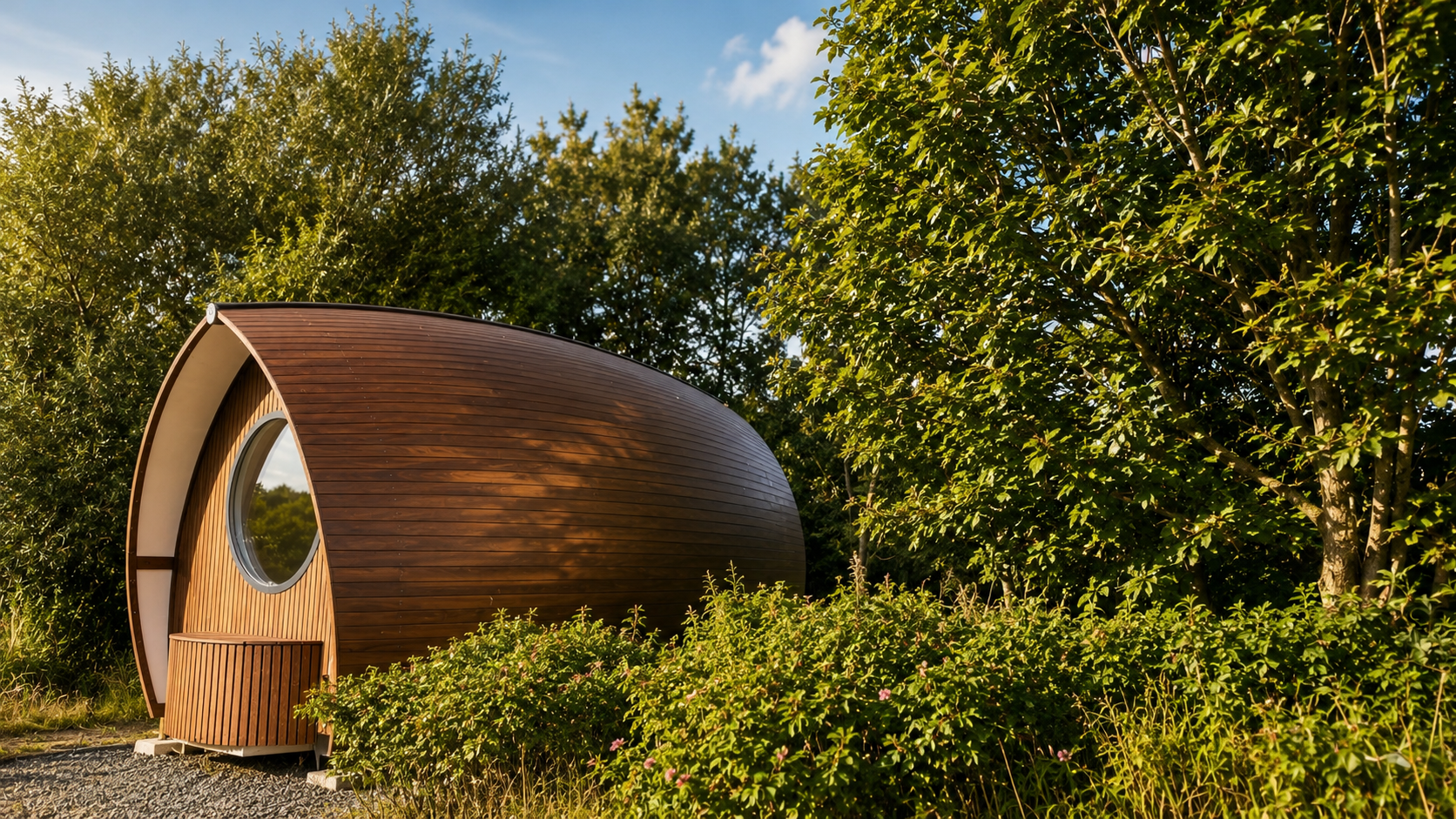
The Hotelier Pod
Look closely at why outdoor hospitality schemes stall in planning, and a pattern emerges. The accommodation is rarely the problem. Everything around it usually is.
Planning remains one of the barriers operators most often name when they try to expand. It is easy to assume the sticking point is the units themselves: how many, how big, how visible. Recent decisions tell a different story. Even modest, well-designed schemes are being held up, and not because a committee objected to the idea of guests sleeping in the landscape. They stall on the practical questions that were answered too late, or not at all.
What actually holds schemes up
Four issues come up again and again:
Access. Can guests, deliveries and emergency vehicles reach the site safely? Narrow lanes and poor visibility at junctions are among the most common objections.
Drainage. Where does wastewater go, and what happens to surface water when ground is disturbed? Rural sites without mains connections face close scrutiny here.
Ecology. What lives on the land now, and how will the scheme protect or improve it? Surveys often have to be done in particular seasons, so leaving them late can cost months.
Community impact. How will neighbours experience noise, traffic and light? Objections that go unaddressed tend to harden.
None of these is about the accommodation concept. All of them are about how the scheme fits its place.
Why the unit still matters
If the questions are about fit, the unit can either help or hinder the answer. This is where a well-designed pod earns its place.
A light footprint. Compact Pods typically need far less groundwork than a cabin or lodge, so there is less disturbance to soil, roots and drainage.
Built off-site. Units arrive finished, which shortens time on site and cuts construction traffic on rural lanes.
Reversible by design. A Pod can be lifted and moved. That makes it easier to show a scheme is low-impact and does not permanently change the land.
Quiet in the landscape. A small, carefully finished unit sits more easily in a view than a larger building, especially when it is sited with care.
A good pod does not get a scheme approved on its own. But it removes reasons to refuse, and it makes the honest case for low impact much easier to make.
The lighter a scheme sits on the land, the easier it is to defend.
Get ahead before you apply
The schemes that move fastest treat planning as part of the design process, not the final hurdle. In practice, that means:
Talk to the planners early. A pre-application conversation flags local concerns before money is spent on drawings.
Commission surveys in the right season. Ecology work missed in spring can push an application back by a year.
Solve access and drainage first. Settle how guests arrive and where water goes before deciding where the units sit.
Speak to the neighbours. Explain the scheme early, listen, and show where their concerns changed the plan.
Choose units that support the case. Pick a unit whose footprint, delivery and reversibility strengthen the application rather than complicate it.
None of this guarantees approval. It does mean the committee is weighing a well-resolved scheme, not a good idea with loose ends.
Planning is a design question
The operators who get through planning fastest are not the ones with the boldest ideas.
They are the ones who resolved the details early and chose units that make low impact easy to prove.