Why the luxury market is shrinking its footprint.
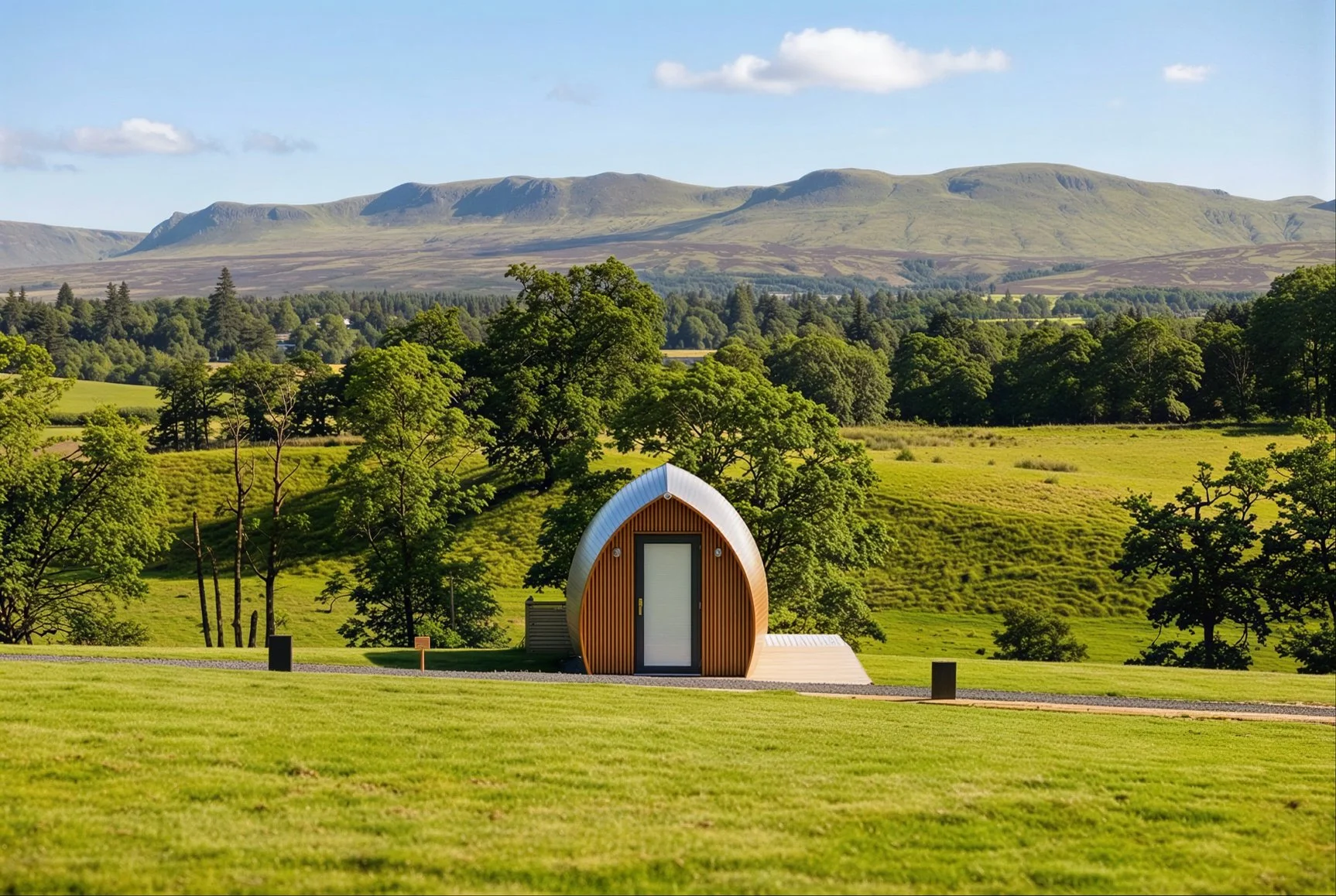
The Hotelier Pod
For decades, luxury meant bigger.
Larger hotel suites. Expansive resort developments. More square footage, more amenities, more infrastructure.
Size was synonymous with status.
But something interesting is happening across the luxury hospitality landscape.
The most forward-thinking operators are beginning to build less - and design better.
Not smaller experiences. Just smarter physical footprints.
And the shift is not about cost-cutting. It’s about relevance.
Luxury has changed what it values
Today’s luxury traveller is not necessarily looking for the biggest hotel.
They are looking for something far more difficult to manufacture:
Privacy
Meaningful connection with place
Quiet design that feels intentional
Experiences that feel rare rather than mass-produced
Large developments can struggle to deliver this kind of intimacy.
In contrast, smaller, carefully placed accommodations often create a stronger emotional experience.
The paradox is simple: the smaller the footprint, the greater the sense of exclusivity.
The economics of intelligent expansion
There’s also a strategic layer driving this shift.
Traditional hotel expansion models require:
Large capital investment
Long planning cycles
Permanent environmental impact
High operational overhead
But the hospitality sector is becoming more agile and demand-responsive.
Operators increasingly want the ability to:
Test new locations without committing to permanent construction
Expand room inventory seasonally
Activate unused land without major infrastructure
Evolve their offering as guest behaviour changes
Smaller, flexible accommodation formats make this possible.
They allow luxury operators to grow carefully rather than massively.
Sustainability is no longer a marketing angle
Environmental sensitivity is now part of the luxury equation.
Guests are paying closer attention to how destinations interact with their surroundings.
Heavy construction, permanent foundations, and large developments can fundamentally alter landscapes that guests travel specifically to experience.
The new model emerging across many luxury destinations prioritises:
Minimal land disturbance
Reversible development
Architecture that integrates with nature
Thoughtful scale rather than visual dominance
Luxury, increasingly, is about belonging to a place - not overpowering it.
The rise of the “Light Touch” luxury model
Across Europe and beyond, a new category is quietly gaining traction:
High-end accommodation with a minimal footprint.
Think:
Boutique retreats with only a handful of rooms
Landscape-sensitive cabins
Eco-lodges designed to disappear into their surroundings
Hospitality units that can evolve with the land rather than permanently reshape it
These concepts allow operators to maintain premium guest experiences while preserving the character of the site itself.
And increasingly, that balance is exactly what guests expect.
The future of luxury development
The next generation of hospitality development may not be defined by scale.
Instead, it will likely be defined by precision.
Smaller footprints. Better design. More thoughtful placement. Greater flexibility.
Not less luxury.
Just luxury that understands its environment.