Weather-proofing our units for hotels in Scotland and beyond.
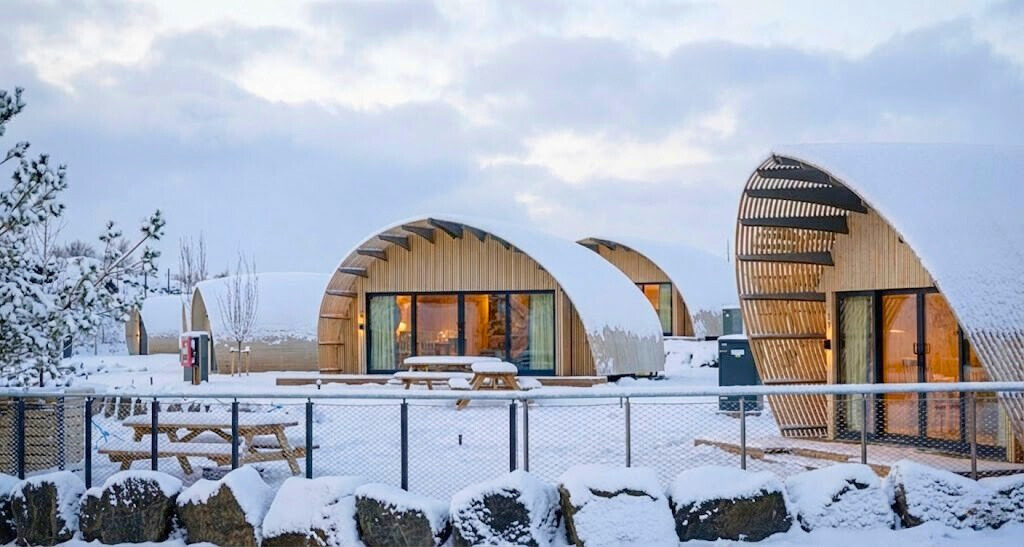
The Wave
Whether it’s hotels in Scotland, the wider UK, or abroad, the same challenge comes up again and again: how to offer guests an experience that feels cosy, warm, safe and reliable through ever-changing weather conditions.
At Armadilla, we’ve spent many years developing buildings that do more than simply withstand winter; they create comfort, protect the people who use them, and maintain their performance season after season.
In this blog, we’re sharing how our approach to design and engineering supports hotels in Scotland (and beyond) with durable, energy-efficient accommodations:
Structural strength that supports hotels in Scotland
The design of each Armadilla unit begins with shape. Curved architecture distributes pressure far more effectively than vertical walls, which means the exterior deflects strong winds instead of resisting them.
Beneath the unit, a galvanised steel chassis keeps everything lifted clear of the earth. This separation prevents moisture build-up, reduces the risk of frost impacting the foundation and protects the structure during long wet spells.
At Armadilla, we work with toughened glazing as standard because windows take the brunt of sudden temperature changes. When the glass is designed for impact and thermal stability, the interior remains protected, whatever the weather brings.
Thermal comfort through Passivhaus-inspired principles
Energy efficiency is largely about what you can prevent, as well as what you can generate. That’s why our buildings follow principles inspired by Passivhaus: close control of air movement, careful insulation, and a building envelope designed to keep warmth exactly where you want it.
A continuous cocoon of insulation allows heat to stay inside without escaping through weak spots. Floors receive particular attention since our units are elevated and need protection against cold rising from below. Airtight construction reduces unwanted draughts, which is especially valuable on exposed coastal or high sites, while double-glazed A-rated windows complete the picture by retaining warmth while keeping condensation at bay.
Fresh-air stability
One of the most underestimated aspects of winter comfort is the balance between fresh air and heat retention. Opening windows is often not practical during cold months (and certainly not during storms), so mechanical ventilation with heat recovery offers a reliable way to maintain air quality.
The system captures much of the heat already inside the building and transfers it to fresh incoming air. Guests breathe air that feels clean and mild without any dramatic temperature dips.
Moisture sensors manage humidity after showers, which keeps interior surfaces dry, and fine filtration improves indoor air purity, useful for rural hotel sites where pollen or particulates are common.
Year-round temperature control
To keep a steady indoor climate, we rely on an inverter heat pump that performs efficiently even when the outside temperature drops far below zero. Instead of fluctuating between hot blasts and cool drop-offs, it adjusts gradually and keeps the interior comfortable.
Underfloor heating provides a gentle secondary system so guests always experience warmth that feels even and welcoming.
Because unpredictable weather is a fact of life for many locations, we developed an in-built POD Control system that provides centralised management of energy use, frost protection and climate settings. Through this system, operators can monitor temperature, humidity and air quality remotely, ensuring every unit remains stable and comfortable even during sudden cold snaps or coastal gales. The ability to adjust heating from a distance or identify performance issues early offers both reassurance and efficiency, making a tangible difference to guest comfort and operational reliability.
Accoya cladding: A natural advantage
Exterior durability is essential for long-term peace of mind. We use Accoya timber for our cladding to prevent swelling, shrinking, cracking and other forms of weather-related fatigue. Accoya behaves differently due to its acetylation process, which alters the wood so it resists moisture, decay and insects.
When timber barely absorbs water, it remains smooth, correct in shape and dependable in high humidity. Coatings last significantly longer too, which helps hotels reduce maintenance cycles.
Even uncoated, Accoya ages well, turning soft silver without losing strength - whatever the weather.
Built for changing weather conditions
Every unit arrives fully assembled and airtight, so weather-proof performance is built in before reaching the site.
Adjustable feet ensure correct positioning and protect against ground movement caused by frost or saturation. These features offer long-term resilience that helps hotels in Scotland create accommodation that feels dependable throughout the year.
At Armadilla, our aim has always been to design buildings that understand the climate they’re entering. For hotels, winter resilience is not an optional upgrade; it’s a foundation for guest satisfaction and operational stability.
By combining structural strength, advanced insulation, thoughtful ventilation and high-performance materials such as Accoya, our units maintain warmth, dryness and comfort, even in the most demanding conditions.