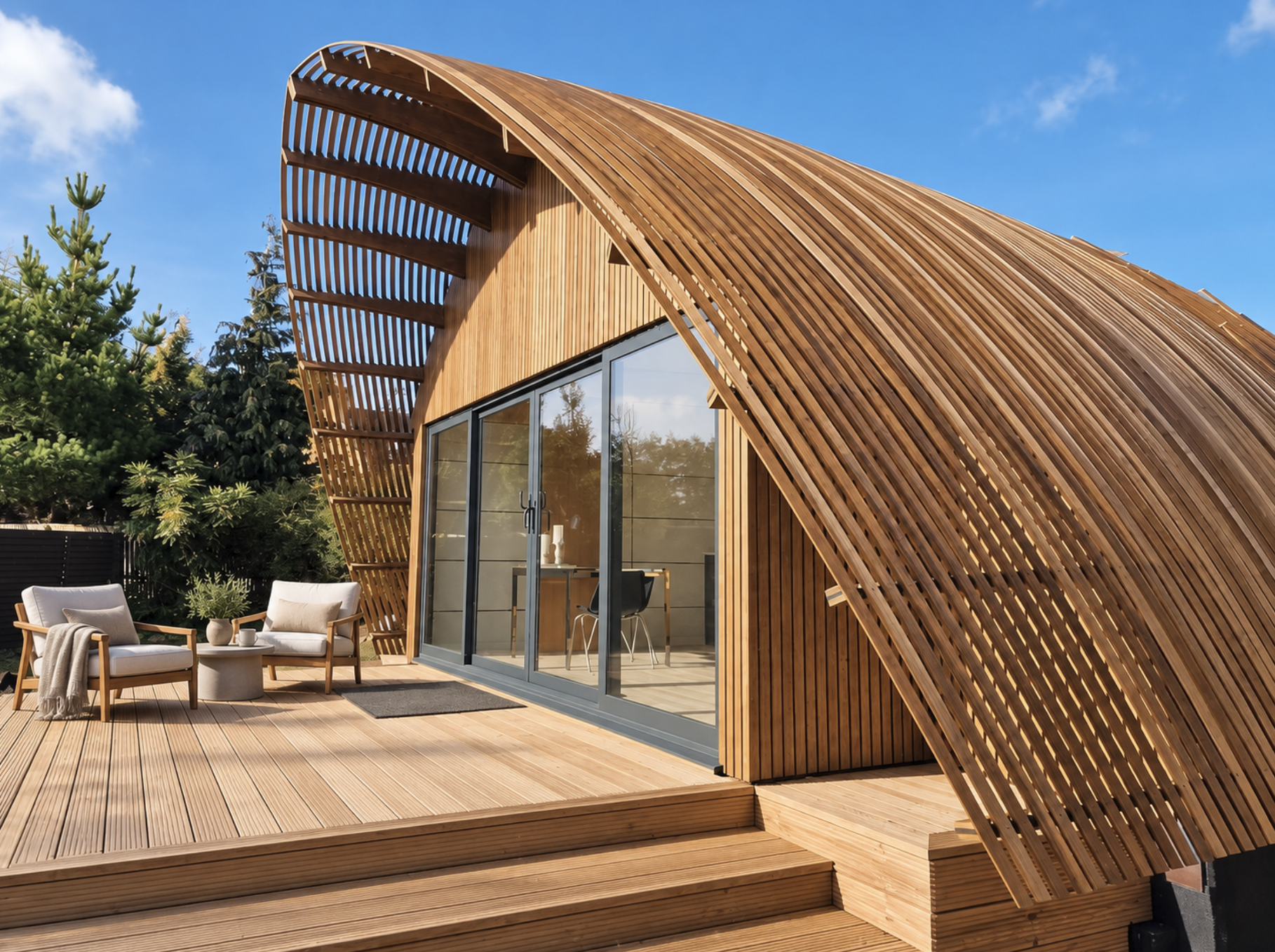
The Wave
The most expensive room is the one you can't move.
Every permanent building is a forecast set in concrete. In a market this uncertain, the most valuable thing a room can offer an operator may be the ability to change its mind. When an operator commits to a new wing or a row of lodges, they are making a bet. Not just that guests will come, but that they will want this kind of room, in this exact spot, at this price, for the next twenty or thirty years.
For most of hospitality's history, that bet was simply the cost of growing. There was no other way to add rooms.
There is now. And in today's conditions, the difference between a room that is fixed and a room that can move is no longer a technical detail. It is a strategic one.
A market that rewards caution
The backdrop for development in 2026 is not encouraging. Allsop reports that the UK hotel sector had a tough start to the year, with demand broadly flat and rising operating costs eating into profits. CoStar notes that development financing is thin on the ground while construction costs stay high.
Add shifting guest tastes, unpredictable weather and changing rules on land use, and the picture is clear. Operators are being asked to make long, expensive, irreversible commitments at exactly the moment the future is hardest to read.
The natural response is to wait. But waiting has a cost too: the guests who booked elsewhere, the season that earned nothing, the land that stayed empty.
The hidden cost of permanence
A permanent build rarely shows its true cost on day one. It reveals it slowly, as the world moves on and the building does not.
The wrong spot stays the wrong spot. If a view disappoints, a neighbour complains or a better corner of the site emerges, the building cannot follow.
Layouts age. A room designed for today's guest is fixed for tomorrow's, whatever they turn out to want.
Capital gets stuck. Money poured into foundations and groundworks is spent for good. It cannot be redeployed if the plan changes.
The land is committed. Once built on, a field is no longer an option for anything else, whether that is a new venture, a sale or a return to nature.
None of this makes permanent building wrong. It makes it a commitment that should be made knowingly, and only where permanence is genuinely an advantage.
What flexibility actually buys
A relocatable unit turns a single, all-or-nothing bet into a series of smaller decisions, each made with better information than the last.
Test before you commit. Start with a few pods, learn what guests pay and when they come, then decide whether to add more.
Scale in step with demand. Grow the site as bookings justify it, rather than building for a forecast.
Move to where the value is. If one part of the land outperforms another, the rooms can follow the view, the privacy or the guests.
Keep the asset liquid. A unit that can be lifted and relocated keeps a value of its own, rather than being tied to one plot of land.
Give the land back. When a unit moves on, the ground beneath it can recover. That is a stronger sustainability story, and an easier one to prove to planners, than any permanent build can offer.
Flexibility is not the absence of commitment. It is the ability to commit in stages.
Relocatable is not the same as temporary
There is an obvious objection. Doesn't a room that can move feel less substantial, less premium, less like a place worth paying for?
Only if it is built that way. The value of flexibility depends entirely on the quality of what is being moved. A flimsy unit that can be relocated is just a flimsy unit.
The premium units worth investing in are built to the opposite standard:
Engineered for the long term, with a structure designed to be lifted and moved without losing integrity.
Comfortable in every season, properly insulated and heated, so the unit earns all year rather than for a summer.
Finished to hotel standard, so guests experience a premium room, not a compromise.
Made off-site, to a consistent specification that does not depend on the weather or the ground on the day of installation.
Built this way, a premium units offer what was once a trade-off: the permanence guests feel, with the flexibility operators need.
Building for the decade you can't predict
No operator knows what guests will want in 2036, what the next planning framework will ask, or which corner of their land will prove most valuable. The honest response is not to pretend otherwise. It is to build in a way that leaves room to adapt.
The question for your next development is not just "what should we build?" It is "how much of this decision do we want to be able to change?"